<?xml version="1.0" encoding="utf-8"?><feed xmlns="http://www.w3.org/2005/Atom" ><generator uri="https://jekyllrb.com/" version="4.4.1">Jekyll</generator><link href="http://phyclops.com/feed.xml" rel="self" type="application/atom+xml" /><link href="http://phyclops.com/" rel="alternate" type="text/html" /><updated>2026-03-23T18:36:56+00:00</updated><id>http://phyclops.com/feed.xml</id><title type="html">Phyclops - We listen to Plants</title><subtitle>Phyclops looks at electrical signalling and communication in plants.</subtitle><author><name>Phyclops</name></author><entry><title type="html">Ongoing Research Weekly Updates</title><link href="http://phyclops.com/update/2025/08/14/ongoing-research-updates.html" rel="alternate" type="text/html" title="Ongoing Research Weekly Updates" /><published>2025-08-14T00:00:00+00:00</published><updated>2025-08-14T00:00:00+00:00</updated><id>http://phyclops.com/update/2025/08/14/ongoing-research-updates</id><content type="html" xml:base="http://phyclops.com/update/2025/08/14/ongoing-research-updates.html"><![CDATA[<h2 id="ongoing-research-updated-weekly-mostly-through-bluesky">Ongoing Research Updated Weekly (mostly) Through BlueSky</h2>

<p><a href="https://bsky.app/profile/phyclopsproject.bsky.social">Forward to phyclops on BlueSky</a></p>

<blockquote class="bluesky-embed" data-bluesky-uri="at://did:plc:3vcagfn6a4k35xev5ra4fzpc/app.bsky.feed.post/3lw2i4waznk2l" data-bluesky-cid="bafyreiaqiuxnhbijvclq66bjxp3eelf67jlmn3fionakb2wxevkqhdusz4" data-bluesky-embed-color-mode="dark"><p lang="en">Recording electrical signals from a #passiflora using a custom array of #microneedles inserted into the stem just below a leaf. #biology #plants<br /><br /><a href="https://bsky.app/profile/did:plc:3vcagfn6a4k35xev5ra4fzpc/post/3lw2i4waznk2l?ref_src=embed">[image or embed]</a></p>&mdash; Phyclops Project - We Listen To Plants (<a href="https://bsky.app/profile/did:plc:3vcagfn6a4k35xev5ra4fzpc?ref_src=embed">@phyclopsproject.bsky.social</a>) <a href="https://bsky.app/profile/did:plc:3vcagfn6a4k35xev5ra4fzpc/post/3lw2i4waznk2l?ref_src=embed">Aug 10, 2025 at 4:24 PM</a></blockquote>
<script async="" src="https://embed.bsky.app/static/embed.js" charset="utf-8"></script>]]></content><author><name>Phyclops</name></author><category term="update" /><category term="update" /><summary type="html"><![CDATA[Ongoing Research Updated Weekly (mostly) Through BlueSky]]></summary></entry><entry><title type="html">Plant Signals in a Geomagnetic Storm</title><link href="http://phyclops.com/keyvideo/2025/07/23/video-plant-signals-geomagnetic-storm.html" rel="alternate" type="text/html" title="Plant Signals in a Geomagnetic Storm" /><published>2025-07-23T00:00:00+00:00</published><updated>2025-07-23T00:00:00+00:00</updated><id>http://phyclops.com/keyvideo/2025/07/23/video-plant-signals-geomagnetic-storm</id><content type="html" xml:base="http://phyclops.com/keyvideo/2025/07/23/video-plant-signals-geomagnetic-storm.html"><![CDATA[<h2 id="plant-signals-in-a-geomagnetic-storm">Plant Signals in a Geomagnetic Storm</h2>
<p>Question this experiment will answer:<br />
Can a geomagentic storm alter the electrical signalling patterns of a Conifer (Picea alba)?</p>

<p>We know that animal species can sense the earth’s geomagnetic field. Many bird species use their magnetoreception 
for navigation. Some cetaceans such as dolphins and orcas also sense the magnetic field and use it
for navigating long distances through the oceans. It is believed that when geomagnetic disturbances (storms) ocurr
these marine mammals can temporarily lose their sense of direction. More recently it was shown that at least
one ant species uses the geomagnetic field as an additional cue for finding their way back to their nest.</p>

<p>Plants do not move and sensing the earth’s magnetic field for the purpose of ortientation may not give them 
any significant advantage as it does to the motile animal species mentioned, 
however since geomagnetic storms are mostly caused by abrupt changes in the particle flow and the spectral output 
of the sun and plants are very sensitive to different wavelengths of light, even if they don’t sense geomagnetism 
directly they could be sensing the associated changes in photon spectral composition and react to it, for example to
protect their sensitive photosynthetic machinery.</p>

<p>Unfortunately we had to stop this experiment on 7. June 2025 after six months of data collection because our 
equipment was stolen from the field site. We lost one environmental recorder and two plant signal recorders “Minions”.</p>

<p>Luckily we have developed a new type of plant signal recorder, the <a href="https://phyclops.com/devices/2025/06/01/PhyclopsOneV2-standalone.html">Phyclops One v2</a> which is much easier to use than the “Minions”. We also sell it at a very competitive price.</p>

<p>Setting up a new plant and geomagnetism experiment or instead creating a completely different experiment related to plant associative learning (plant intelligence) will be much quicker with the <a href="https://phyclops.com/devices/2025/06/01/PhyclopsOneV2-standalone.html">Phyclops One v2</a>.</p>

<p>The latest <a href="https://youtu.be/paGXWCpVTj4">video below</a> summarizes the three-step analysis we performed on the geomagnetic and plant data to answer our research question. We find that it is unfortuntantely not possible to identify a reaction to geomagnetic disturbances by performing
voltage measurements on the stem of a mid-sized conifer.</p>

<h2 id="all-videos-for-the-geomagnetism-long-run-experiment">All videos for the Geomagnetism long-run experiment</h2>

<h1 id="newest">Newest</h1>
<p><img src="https://youtu.be/paGXWCpVTj4" alt="Video 40" /></p>

<p><img src="https://youtu.be/0RqEM4VQv08" alt="Video 39" /></p>

<p><img src="https://youtu.be/XF-HcaxYZbo" alt="Video 38" /></p>

<p><img src="https://youtu.be/xIhUCuBbhe8" alt="Video 37" /></p>

<p><img src="https://youtu.be/W-1yuLkbS0k" alt="Video 36" /></p>

<p><img src="https://youtu.be/KXOfQnxWrgE" alt="Video 35" /></p>

<p><img src="https://youtu.be/LDgj4u4BOhs" alt="Video 34" /></p>

<p><img src="https://youtu.be/V9XIdEd4WZY" alt="Video 33" /></p>

<p><img src="https://youtu.be/YxRXxnekUQo" alt="Video 32" /></p>

<h1 id="introduction">Introduction</h1>
<p><img src="https://youtu.be/NXxLGXdeZsM" alt="Video 31" /></p>

<h2 id="geomagnetic-kp-index-global-indicator-for-disturbances-of-the-earths-magnetic-field">Geomagnetic Kp-index (global indicator for disturbances of the Earth’s magnetic field)</h2>
<p><img src="/assets/images/geomag-Kp-early-October-2024-Screenshot_2024-11-10_07-15-26.jpg" alt="" /></p>]]></content><author><name>Phyclops</name></author><category term="keyvideo" /><category term="video" /><summary type="html"><![CDATA[Plant Signals in a Geomagnetic Storm Question this experiment will answer: Can a geomagentic storm alter the electrical signalling patterns of a Conifer (Picea alba)?]]></summary></entry><entry><title type="html">Phyclops-One v2 kit</title><link href="http://phyclops.com/devices/2025/06/01/PhyclopsOneV2-standalone.html" rel="alternate" type="text/html" title="Phyclops-One v2 kit" /><published>2025-06-01T00:00:00+00:00</published><updated>2025-06-01T00:00:00+00:00</updated><id>http://phyclops.com/devices/2025/06/01/PhyclopsOneV2-standalone</id><content type="html" xml:base="http://phyclops.com/devices/2025/06/01/PhyclopsOneV2-standalone.html"><![CDATA[<h2 id="phyclops-one-v2-kit">Phyclops-One v2 kit</h2>

<table>
  <tbody>
    <tr>
      <td>Two independent recording channels<br />(voltage differential) <br /><br /> Data written to micro-SD card in binary and csv format <br /><br /> Recording at 10 samples per second<br />per channel  <br /><br /> Bipolar input range -2.8 to +2.8 V <br /><br /> Power supply range 3.3 to 6 V <br /><br />  20 days of operation when powered by two 18650 batteries (2x2000 mAh in parallel)  <br /><br /> 10 days of operation when powered by three AA batteries (3x2000 mAh in series) <br /><br /> Size 80 x 40 mm</td>
      <td>![Battery Powered Standalone Plant Signal Recorder](/assets/images/PhyclopsOne-v2-kit-photo11.jpg)</td>
    </tr>
  </tbody>
</table>

<style>.pp-8EN8VRMUQQPNC{text-align:center;border:none;border-radius:0.25rem;min-width:11.625rem;padding:0 2rem;height:2.625rem;font-weight:bold;background-color:#FFD140;color:#000000;font-family:"Helvetica Neue",Arial,sans-serif;font-size:1rem;line-height:1.25rem;cursor:pointer;}</style>

<form action="https://www.paypal.com/ncp/payment/8EN8VRMUQQPNC" method="post" target="_blank" style="display:inline-grid;justify-items:center;align-content:start;gap:0.5rem;">
  <input class="pp-8EN8VRMUQQPNC" type="submit" value="Buy Now" />
  <section style="font-size: 0.75rem;"> Powered by <img src="https://www.paypalobjects.com/paypal-ui/logos/svg/paypal-wordmark-color.svg" alt="paypal" style="height:0.875rem;vertical-align:middle;" /></section>
</form>

<p><br /><br />
What can you do with this ?</p>

<p><a href="https://github.com/phyclopsphyclops/PhyclopsOnev2-downloads">Software tools, firmware and documentation</a></p>

<p>Example: How to connect it to a plant (Indoor/Outdoor)</p>

<p>Board with all components in place (some soldering is required)</p>

<p><img src="/assets/images/PhyclopsOne-v2-kit-photo14.jpg" alt="Assembled board with capacitors and pin headers" /></p>

<p>(Some soldering is required)</p>

<p><img src="/assets/images/PhyclopsOne-v2-photo02.jpg" alt="Unassembled board with hand for size comparison" /></p>]]></content><author><name>Phyclops</name></author><category term="devices" /><category term="devices" /><summary type="html"><![CDATA[Phyclops-One v2 kit]]></summary></entry><entry><title type="html">Latest Research Article - Plant Electrical Reactions</title><link href="http://phyclops.com/research/2024/12/05/our-latest-scientific-paper-plant-electrical-reactions.html" rel="alternate" type="text/html" title="Latest Research Article - Plant Electrical Reactions" /><published>2024-12-05T00:00:00+00:00</published><updated>2024-12-05T00:00:00+00:00</updated><id>http://phyclops.com/research/2024/12/05/our-latest-scientific-paper-plant-electrical-reactions</id><content type="html" xml:base="http://phyclops.com/research/2024/12/05/our-latest-scientific-paper-plant-electrical-reactions.html"><![CDATA[<h2 id="how-to-discover-plant-electrical-reactions-to-specific-environmental-conditions">How to discover plant electrical reactions to specific environmental conditions</h2>

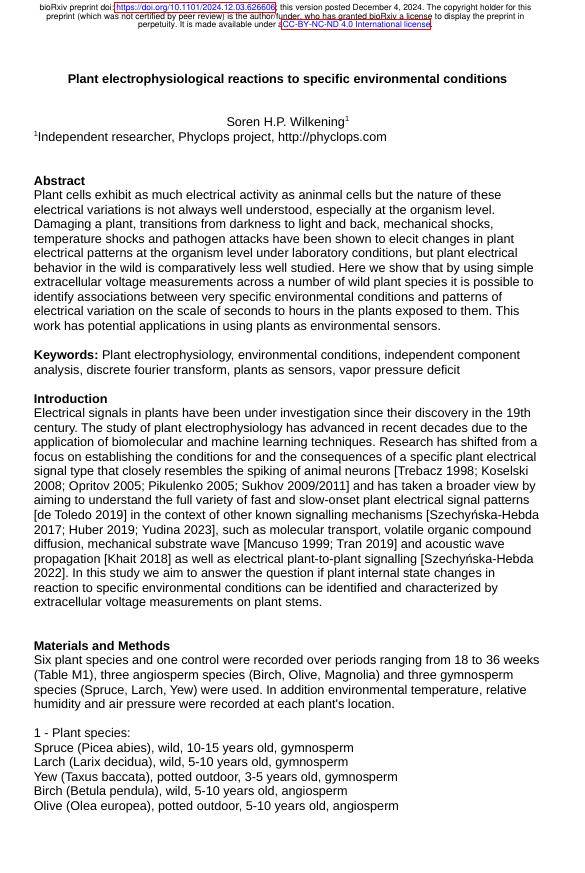
<h1 id="download-from-biorxiv"><a href="https://www.biorxiv.org/content/10.1101/2024.12.03.626606v2">Download from bioRxiv</a></h1>
<p><br /><br /></p>
<h1 id="download-from-github"><a href="/assets/docs/2024.12.03.626606v2.full.pdf">Download from github</a></h1>
<p><br /></p>

<p><img src="/assets/images/excerpt-bioRxiv-paper-v2-phyclops-Screenshot_2025-05-26_10-03-08.jpg" alt="Research paper plant electrical signals" /></p>

<p>A sample of the data used in this research paper is available on <a href="https://zenodo.org/doi/10.5281/zenodo.10557077">Zenodo</a></p>]]></content><author><name>Phyclops</name></author><category term="research" /><category term="research" /><category term="data" /><summary type="html"><![CDATA[How to discover plant electrical reactions to specific environmental conditions]]></summary></entry><entry><title type="html">Indoor testing of two ‘Minions’ with new AmpV4</title><link href="http://phyclops.com/update/2024/10/04/update-two-minions-with-ampv4.html" rel="alternate" type="text/html" title="Indoor testing of two ‘Minions’ with new AmpV4" /><published>2024-10-04T00:00:00+00:00</published><updated>2024-10-04T00:00:00+00:00</updated><id>http://phyclops.com/update/2024/10/04/update-two-minions-with-ampv4</id><content type="html" xml:base="http://phyclops.com/update/2024/10/04/update-two-minions-with-ampv4.html"><![CDATA[<h2 id="indoor-testing">Indoor testing</h2>
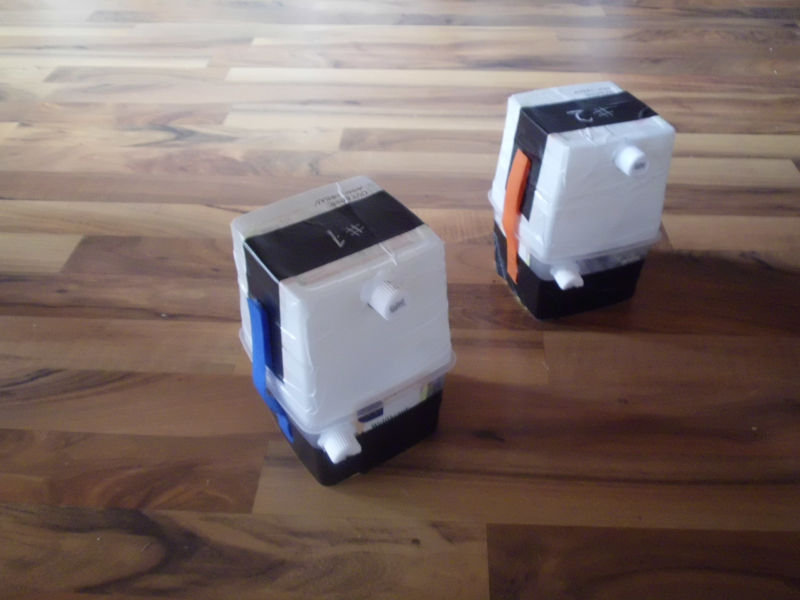
<p>After calibrating two amplifier Version 4 boards and hooking them up to the microcontroller two new cases were
built. Unintentionally they turned out to look like Minions, which is why I am tempted to call them just that.</p>

<p><img src="/assets/images/minion-field-nonurban-open.jpg" alt="" /></p>

<p>The goal is to set them up over the next couple of days in a new field location. One will be connected to a 
douglas fir, the other one to a piece of dead wood as a control.</p>

<p><img src="/assets/images/minions-field-nonurban-1and2.jpg" alt="" /></p>]]></content><author><name>Phyclops</name></author><category term="update" /><category term="update" /><summary type="html"><![CDATA[Indoor testing After calibrating two amplifier Version 4 boards and hooking them up to the microcontroller two new cases were built. Unintentionally they turned out to look like Minions, which is why I am tempted to call them just that.]]></summary></entry><entry><title type="html">Amplifier Version 4 is good to go</title><link href="http://phyclops.com/update/2024/09/15/update-ampv4-ready.html" rel="alternate" type="text/html" title="Amplifier Version 4 is good to go" /><published>2024-09-15T00:00:00+00:00</published><updated>2024-09-15T00:00:00+00:00</updated><id>http://phyclops.com/update/2024/09/15/update-ampv4-ready</id><content type="html" xml:base="http://phyclops.com/update/2024/09/15/update-ampv4-ready.html"><![CDATA[<h2 id="amplifier-version-4-is-ready">Amplifier version 4 is ready</h2>
<p>After a week of design work, 3-4 weeks of prototype testing on a breadboard connected to an Avocado plant the final design was sent out to the company doing the fabrication. Just three weeks later I received the five amplifier boards that I had orded and, to my great relief, they all worked as intended (phew).</p>

<p><img src="/assets/images/AmpV4-PCB.jpeg" alt="" /></p>]]></content><author><name>Phyclops</name></author><category term="update" /><category term="update" /><summary type="html"><![CDATA[Amplifier version 4 is ready After a week of design work, 3-4 weeks of prototype testing on a breadboard connected to an Avocado plant the final design was sent out to the company doing the fabrication. Just three weeks later I received the five amplifier boards that I had orded and, to my great relief, they all worked as intended (phew).]]></summary></entry><entry><title type="html">Designing a New Amplifier</title><link href="http://phyclops.com/update/2024/07/13/update-designing-new-amp.html" rel="alternate" type="text/html" title="Designing a New Amplifier" /><published>2024-07-13T00:00:00+00:00</published><updated>2024-07-13T00:00:00+00:00</updated><id>http://phyclops.com/update/2024/07/13/update-designing-new-amp</id><content type="html" xml:base="http://phyclops.com/update/2024/07/13/update-designing-new-amp.html"><![CDATA[<h2 id="amplifier-version-4-is-taking-shape">Amplifier version 4 is taking shape</h2>
<p>It is time to look at improving the amplifier design and to come up with a better, less noisy instrumentation amplifier that I can use in outdoor and indoor plant electrical recordings. Since the amplifier is, in my view, the most important component of a recording device, it deserves a lot of TLC :)</p>]]></content><author><name>Phyclops</name></author><category term="update" /><category term="update" /><summary type="html"><![CDATA[Amplifier version 4 is taking shape It is time to look at improving the amplifier design and to come up with a better, less noisy instrumentation amplifier that I can use in outdoor and indoor plant electrical recordings. Since the amplifier is, in my view, the most important component of a recording device, it deserves a lot of TLC :)]]></summary></entry><entry><title type="html">Talk - Plant Electrical Signalling - Earth Species Project</title><link href="http://phyclops.com/keyvideo/2024/03/26/talk-plant-electrophysiology-esp.html" rel="alternate" type="text/html" title="Talk - Plant Electrical Signalling - Earth Species Project" /><published>2024-03-26T00:00:00+00:00</published><updated>2024-03-26T00:00:00+00:00</updated><id>http://phyclops.com/keyvideo/2024/03/26/talk-plant-electrophysiology-esp</id><content type="html" xml:base="http://phyclops.com/keyvideo/2024/03/26/talk-plant-electrophysiology-esp.html"><![CDATA[<h2 id="my-talk-on-plant-electrical-signalling-and-communication---earth-species-project">My Talk on Plant Electrical Signalling and Communication - Earth Species Project</h2>

<p><img src="//www.youtube.com/watch?v=m29lw--FR68" alt="" /></p>

<p>For more videos see the <a href="https://www.youtube.com/@phyclopsphyclops">Phyclops Youtube channel</a></p>]]></content><author><name>Phyclops</name></author><category term="keyvideo" /><category term="video" /><summary type="html"><![CDATA[My Talk on Plant Electrical Signalling and Communication - Earth Species Project]]></summary></entry><entry><title type="html">Data Sample for Download - Conifer (Picea abies)</title><link href="http://phyclops.com/download/2024/02/01/data-download-coniferc.html" rel="alternate" type="text/html" title="Data Sample for Download - Conifer (Picea abies)" /><published>2024-02-01T00:00:00+00:00</published><updated>2024-02-01T00:00:00+00:00</updated><id>http://phyclops.com/download/2024/02/01/data-download-coniferc</id><content type="html" xml:base="http://phyclops.com/download/2024/02/01/data-download-coniferc.html"><![CDATA[<p><img src="/assets/images/ConiferC-early-august-2023.png" alt="Conifer" /></p>

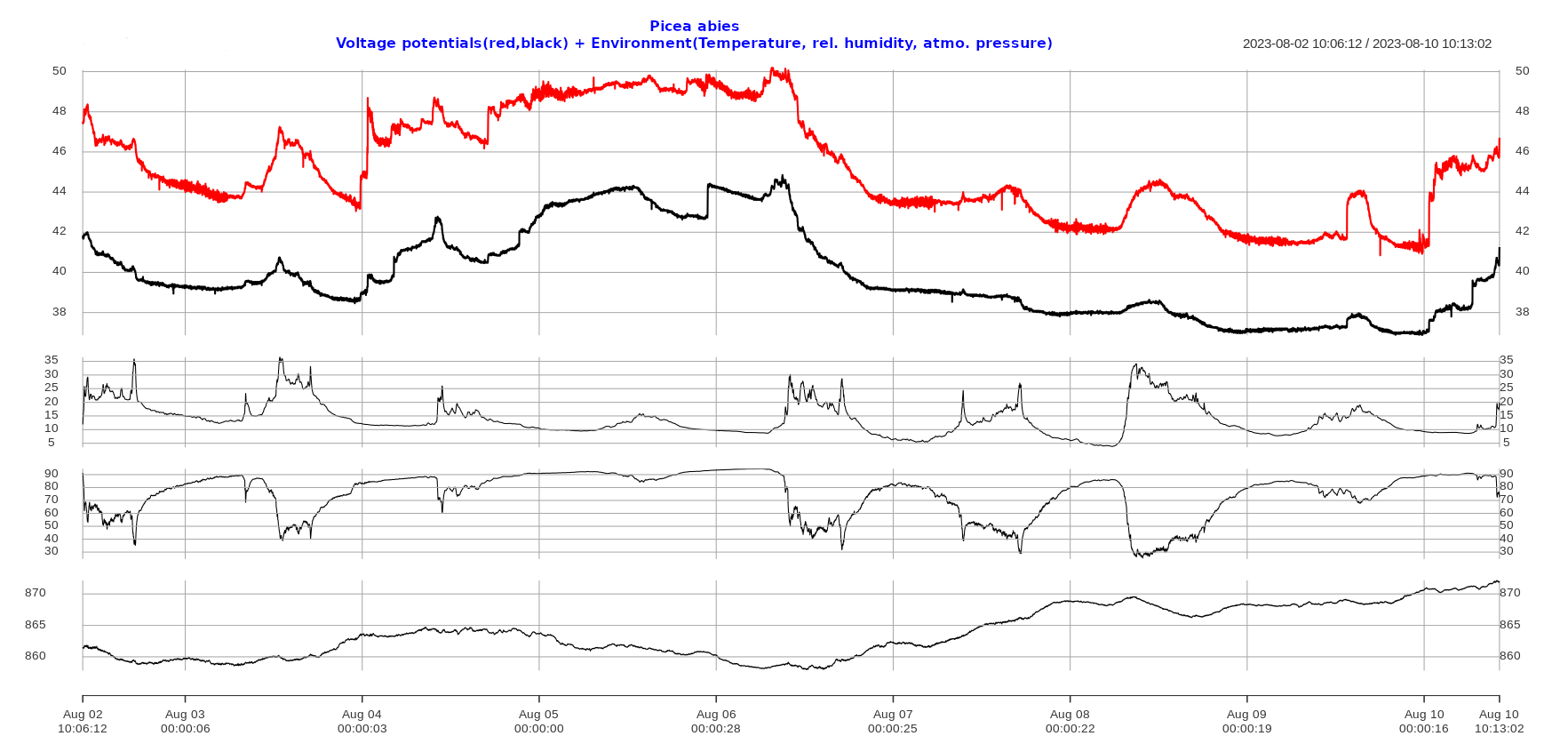
<h2 id="conifer-picea-abies-sample-dataset">Conifer (Picea abies) Sample Dataset</h2>
<p><a href="https://zenodo.org/doi/10.5281/zenodo.10557077">Download it from zenodo</a>
To request access to the full dataset send an email to phyclops at protonmail dot com. Note that this specific collection of electrophysiology recordings contains unwanted noise, but it can still be useful for getting a ‘feel for the data’, which is why we make it available here. For details on what is being recorded see the included Readme file.</p>

<p>As of October 2024 there are many more different datasets for a variety of other plants both potted and wild, indoor and outdoor.
<br /></p>]]></content><author><name>Phyclops</name></author><category term="download" /><category term="data" /><summary type="html"><![CDATA[]]></summary></entry><entry><title type="html">Olive Tree - Detecting Drystress with Machine Learning</title><link href="http://phyclops.com/keyvideo/2023/05/12/olive-indoor-dryness.html" rel="alternate" type="text/html" title="Olive Tree - Detecting Drystress with Machine Learning" /><published>2023-05-12T00:00:00+00:00</published><updated>2023-05-12T00:00:00+00:00</updated><id>http://phyclops.com/keyvideo/2023/05/12/olive-indoor-dryness</id><content type="html" xml:base="http://phyclops.com/keyvideo/2023/05/12/olive-indoor-dryness.html"><![CDATA[<h2 id="electrical-signals-of-a-dry-stressed-olive-tree">Electrical Signals of a dry-stressed Olive tree</h2>
<p>It is possible to detect the irrigation state (dry/irrigated) of an olive tree by analyzing the recorded electrical signals. It is important to note that this detection method can sense dryness well before it becomes apparent e.g. through wilted or discolored leaves, sagging branches etc.</p>

<p><img src="//www.youtube.com/watch?v=dyzDln_mJnY" alt="" /></p>]]></content><author><name>Phyclops</name></author><category term="keyvideo" /><category term="video" /><summary type="html"><![CDATA[Electrical Signals of a dry-stressed Olive tree It is possible to detect the irrigation state (dry/irrigated) of an olive tree by analyzing the recorded electrical signals. It is important to note that this detection method can sense dryness well before it becomes apparent e.g. through wilted or discolored leaves, sagging branches etc.]]></summary></entry></feed>